Owners buying a lot in Lehigh Acres still pay a canal assessment on the tax bill. Call 239-688-7201 with the STRAP and I will look at that line with you.
I’m Sean Kaptaine, a Florida land investor. This guide is the holding-cost file for a vacant lot in this grid: what LA-MSID is, what the per-acre line is at write time, and how I use the tax bill on a call.
What LA-MSID is on a Lehigh Acres lot
Lehigh Acres Municipal Services Improvement District maintains the canal system that drains this grid. The Florida Senate page for House Bill 1255 (2015) is the CS/CS/HB 1255 act creating LA-MSID. That bill created the district, provided a charter, and dissolved the East County Water Control District. The Senate history shows the Governor approved it on June 10, 2015, and it became Chapter 2015-202.
The district sits in Lee County and also takes in land in Hendry County. Hendry land is not this site. Keep a Hendry STRAP on a different call. On a Lehigh Acres pin in Lee County, the canal file and the county tax file still have to match the ground.
LA-MSID’s own finance page says the district operates under Florida Statutes Chapter 189 and Chapter 197. The fiscal year runs October 1 through September 30. That is a district calendar, not a closing date on your lot.
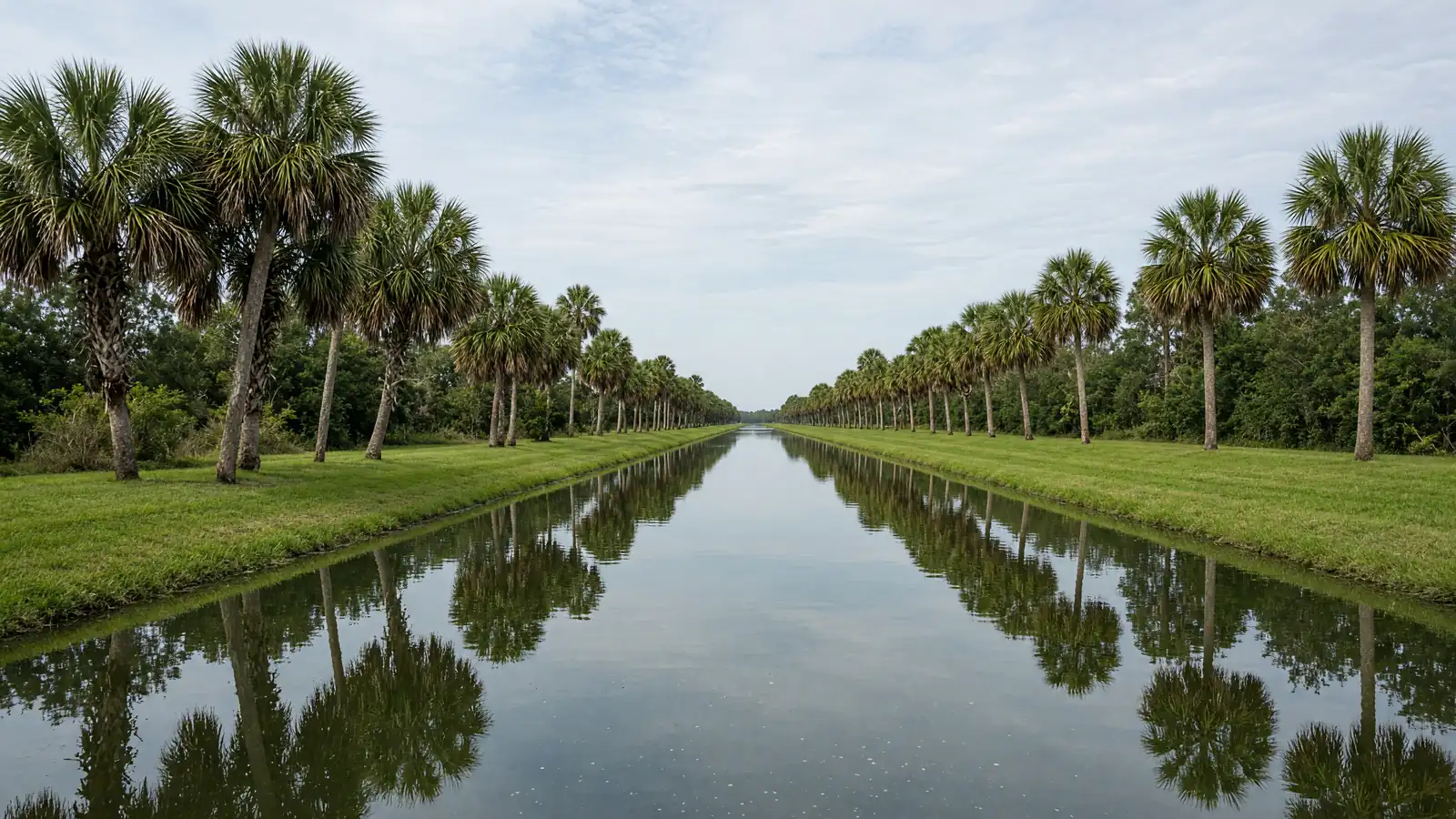
Canals, culverts, mowing, and water-resource work are how the district spends the assessment. A lot on a canal bank is a different walk than a lot two streets off the water. Both still show a district line if the pin is inside the district.
The per-acre assessment at write time
LA-MSID levies a non-ad valorem assessment, per acre or fraction thereof. I pulled the rate from the district finance page at write time: $172.48 per acre. That number lives on the district’s finance page, not as a link on this post. If you call next month, I will pull the page again. Rates move when the board sets a new year.
A typical recorded lot in this grid is about a quarter acre. The assessment is still per acre or fraction thereof, so a smaller pin is not a free pin. I will not multiply dimensions from a listing sheet and call it the acreage. Acreage is the Property Appraiser number on the STRAP. The tax bill is where the district line shows with the county tax.
Holding a vacant lot is taxes plus the district line plus whatever else the county prints for that STRAP. Bring a recent bill if you are selling. If you are buying, ask for it before you write a check. I describe the line. The district and the tax collector print it.
An older capital-improvement PDF on the district site listed a different per-acre figure from a prior spring. I use the finance page at write time because that is the live revenue line the district publishes for the public. If those two documents disagree when you call, we open both and we stay on your STRAP.
Canals, culverts, and the walk
Walk the rear line. Look at the culvert at the street. Standing water after rain is a fact I will describe. The survey and the district maps finish that picture. A culvert is how water moves under a road from one canal section to another. A clogged culvert and a clean canal are different walks on the same street.
The district mows canal rights-of-way on its own schedule. Grass on the bank is not your lawn service. It is a clue that the district claims that slope. Do not assume you can fill, fence, or pipe a district canal because the lot is yours. Permits for work on district lands are a separate file at the district.
A canal-front pin can be the reason someone calls. It can also be the reason the walk takes longer. I still want the STRAP first. Then we walk. Then we read the tax bill. That order keeps the pin, the ground, and the assessment on the same conversation.
East, west, southeast, and southwest are phone maps. The district line does not care which cut you named on the call. The STRAP cares. Name the street if that is all you have. I will put us on a map, then I will ask for the STRAP so the assessment and the canal sit on one record.
How I use the STRAP and the tax bill
On a buy call, I want the STRAP, the walk, and the tax bill. The assessment is one holding cost. County tax is another. Flood, zoning, access, well, and septic are still their own files. This guide stays on the canal line so it does not turn into a zoning article.
On a sell or advertise call, the same three items help. Photos of the canal or the culvert help. The asking price stays yours. I sell lots I buy by owner. I advertise other owners’ lots. I take calls when you want an offer. Name which file you mean.
If you hold several lots, each STRAP has its own assessment line. A stack of lots is several bills, or several lines, not one blended number I invent on this page. Stay on one pin until that file is done, then we open the next STRAP.
The 2015 Senate bill is the creation file. The finance page is the rate file at write time. The tax bill is the pin file. Pull those three in that order. Then call 239-688-7201 with the STRAP. I answer as Sean Kaptaine, Florida land investor.
Nothing on this guide is a listed lot. When I have a lot of my own, that lot gets its own page with the STRAP, the size, and the price. Until then, the phone is how you hear what I can show you and what other owners have asked me to advertise.
Call About Land in Lehigh Acres
Call 239-688-7201 with the STRAP number, lot size, and asking price.