People looking at Lehigh Acres vacant lots still have a water file and a sewage file. Call 239-688-7201 with the STRAP and I will look at that street with you.
I’m Sean Kaptaine, a Florida land investor. This guide is how I separate FGUA water and sewer from a well and a septic system on a vacant lot in this grid.
FGUA water on a Lehigh Acres lot
Florida Governmental Utility Authority runs a Lehigh Acres water and wastewater system. FGUA’s systems page says Lee County is home to three systems, and Lehigh Acres was acquired in December 2003. That is a utility in the community. It is not a tap on every street.
Ask FGUA whether that street has a water tap and a sewer tap. A neighboring house with a meter is a clue. It is not your hookup. Power poles along the road are the same kind of clue. I describe what I see. FGUA confirms the street.
Central water and sewer reach parts of this grid. Many lots still use a well and a septic system. I will not write that a named street has a tap unless FGUA has said so for that street. On the call, we stay on one STRAP so the tap question and the pin stay aligned.
A lot in East Lehigh Acres and a lot on a west-side paved street can have different answers. The cut name is a start. The utility is a street file. Name the street.
Wells on a vacant pin
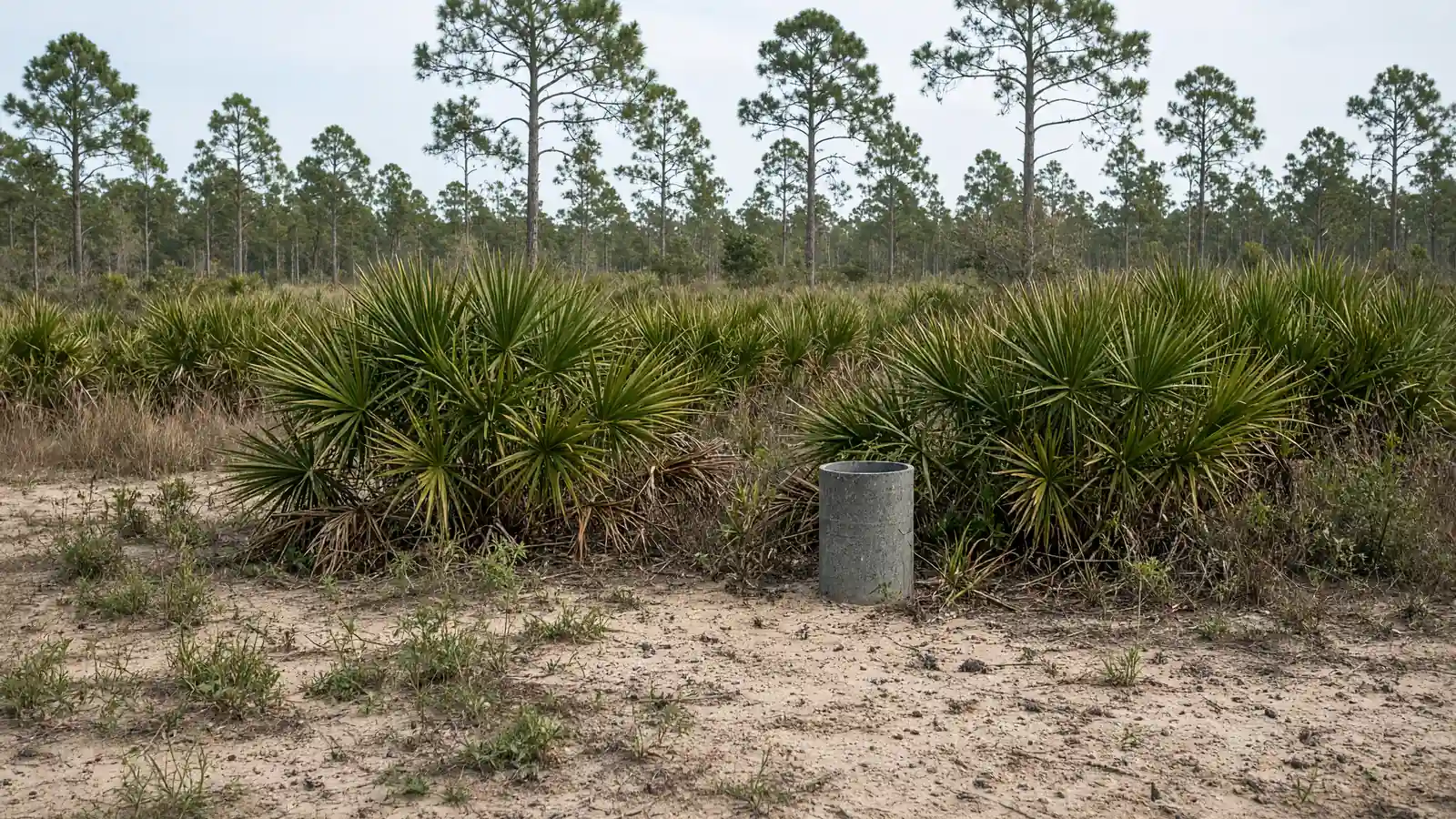
A well is its own file: location, setbacks, and whether the ground will take one. I walk the lot and tell you what I see. A casing in the palmettos is a clue that someone already tried. It is not a permit. The well contractor and the county finish that picture.
Lots without a FGUA tap still need water from somewhere. That somewhere is usually a well in this grid. I describe the ground. I do not issue a well permit. Bring the STRAP so the well conversation and the sewage conversation sit on the same pin.
Access still matters for a well truck. A paved county street and a sand road with a culvert are different widths. Walk the entrance. Say the use on the call so we are looking at the same truck and the same pin.
Septic and the county health department
Florida DEP’s Onsite Sewage Program says onsite sewage treatment and disposal systems, commonly called septic systems, serve a large share of Florida. DEP implements the statewide statutes. The same page says county health department offices continue to do the permitting and inspection for septic tanks. Lee County is in that county-office path.
If you have a question that sits entirely in one county, DEP tells you to contact the local county health department. That is the file for a Lehigh Acres pin. I describe the lot. You confirm onsite sewage with the health department and the state program.
This post does not print a lot-size table for a drainfield. The DEP page I opened for this guide does not state a Lee County lot-size rule I can quote here. If a size rule matters on your STRAP, it comes from the health department file for that pin, not from this article.
A septic tank already in the ground is a fact I will describe if I see it. It is not a permit for the use you have in mind. Pull the current file. Walk the corners. Then call.
Putting water and sewage on one STRAP
The order I use is simple. Pull the STRAP. Ask FGUA about the street. Ask the health department about onsite sewage if there is no sewer tap. Walk the access. Then we talk price on lots I have, or we talk advertising if you own the pin.
Zoning, flood, and the LA-MSID assessment are still separate. This guide stays on water and sewage so those files do not blur. A high asking price does not create a tap. A low asking price does not erase a septic file.
I sell lots I buy by owner. I advertise other owners’ lots. I take calls when you want an offer. Name which file you mean. Call 239-688-7201 with the STRAP and the street. I answer as Sean Kaptaine, Florida land investor.
Nothing here is a listed lot. When I have a lot of my own, that lot gets its own page with the STRAP, the size, and the price. Until then, the phone is the file.
A well file and a septic file take time. Bring what you already have: a prior permit, a photo of a tank lid, a FGUA bill on a neighboring house if you have one. Clues help. They do not replace the current street answer from FGUA or the health department file for the STRAP.
New construction on one corner of the street and woods on the other is common in this grid. Those two scenes can share a road name and still split on water. That is why I ask for the STRAP instead of the subdivision nickname. Stay on the pin until water and sewage are both named.
If you are advertising, say whether you believe the lot has a tap or a well. I will still tell the buyer to confirm. If you are buying, say the use so we know whether we are talking a house tank or only a hold pin. The use changes the questions. The STRAP stays the same.
Call 239-688-7201 when you have the STRAP and the street. I will tell you what I see on water and sewage for that pin, and I will tell you what still has to come from FGUA and the health department. That split is the point of this guide.
Keep Alva, Buckingham, and Hendry County off this utilities call so the pin stays in Lehigh Acres.
Call About Land in Lehigh Acres
Call 239-688-7201 with the STRAP number, lot size, and asking price.